
Cardiovascular genetic
testing infrastructure
for research and collaboration
Heartgene expands access to clinical genetic testing for patients at risk for inherited heart disease through a sponsored access program, enabling identification of genotype-defined patients at scale.
Partnership models
Heartgene works with organizations focused on inherited cardiac disease across research, therapeutic development, and care delivery.
Life Sciences
Drug developers, device makers, diagnostics companies
Identify genotype-defined patients for pipeline development, validate companion diagnostics, and build real-world evidence programs.
Partnership options
- Sponsored testing programs
- Cohort characterization data
- Observational research
- Clinical trial referral
Research Institutions
Universities, research hospitals, advocacy organizations
Study inherited cardiac disease using a prospectively enrolled, sequenced cohort with structured, research-ready data delivery.
Partnership options
- Research data access
- Longitudinal cohort studies
- Educational collaboration
- Grant partnership support
Health Systems
Health systems, cardiology practices, ACOs
Implement genetic testing within your cardiology workflow. Heartgene manages ordering, interpretation, and counseling.
Partnership options
- Testing program implementation
- Cascade testing coordination
- Population-level reporting
- Quality measure reporting
The case for genotype-defined populations
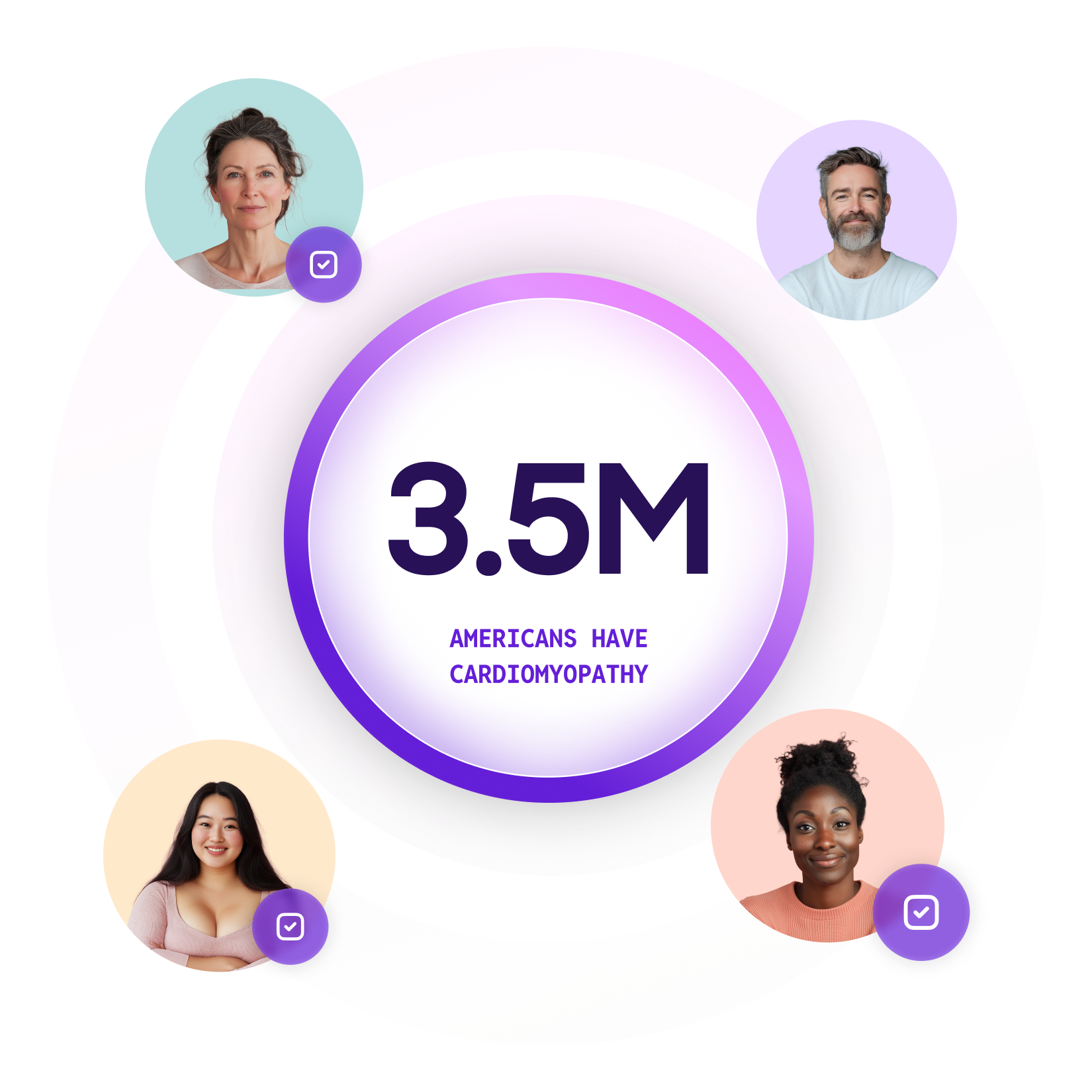
3.5M Americans have non-ischemic cardiomyopathy
30–60% have an identifiable genetic cause
~1% currently receive genetic testing
Why Heartgene







Program reach and early data

33%
diagnostic yield
pathogenic or likely pathogenic variants identified

20+
cardiovascular genes
with variants identified

50% of patients
with positive findings met 2025 AUC criteria for primary prevention ICD consideration

70% of positive patients
would not have qualified based on LVEF alone
How a partnership works
Partnerships start with a conversation and move quickly to alignment.

Submit an inquiry
Fill out the form below.
Our team responds within 2 business days.
Discovery call & scoping
We learn about your goals and data requirements. If there's a fit, we draft a partnership agreement.
Access & onboarding
Depending on the model, you receive data access, a cohort match report, or health system onboarding. Typically within 30–60 days.


Partner with us today
Questions & Answers
What kinds of partnerships does Heartgene typically pursue?
Sponsored testing programs, cohort-based research collaborations, and health system implementation. Structures are tailored to each partner's goals, regulatory context, and timeline.
How is patient consent handled?
Patients are prospectively consented at enrollment for research use of de-identified data. Consent processes and data use protocols are designed to meet IRB standards and support partner regulatory needs.
How long does it take to get started?
Most partnerships move from initial inquiry to access or onboarding within 30 to 60 days, depending on the model. Discovery and scoping typically take 2-4 weeks, with contracting and onboarding running in parallel.
Can Heartgene support prospective cohort studies or sponsor-funded testing?
Yes. Heartgene can design sponsored testing programs that enroll patients against defined genotype or phenotype criteria. Early partners have the opportunity to help shape what is collected over time.